
Voice for Peace, Issue 1 (May 2026)
公開日:2026.07.10
In May 2026, Peace Depot launched Voice for Peace, a new policy-oriented quarterly publication, replacing the former Disarmament and Peace Report. Beginning with this inaugural issue, selected feature articles will be made available in English on our website, either as original English-language articles or as translations of articles originally published in Japanese. Click the links below to read the articles. We would like to thank Anthony Dai for proofreading the English translations.
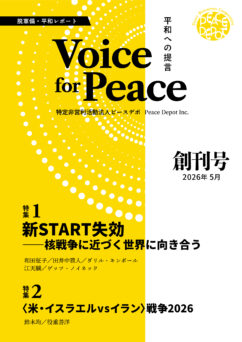
Contents
Feature 1: Nuclear Disarmament After the Expiration of New START: Confronting a World Moving Closer to Nuclear War
Only Human Beings Can Save Humanity from This Crisis: Confronting Developments That Threaten Decades of Hibakusha Advocacy
Masako Wada
Assistant Secretary-General of the Japan Confederation of A- and H-Bomb Sufferers Organizations (Nihon Hidankyo)
Nuclear Disarmament after Expiration of the New START: Japan’s Option
Masato Tainaka
Executive Director of the News and Analysis Center on Nuclear Issues, Asahi Shimbun
An Action Agenda for Renewing Action On Disarmament
Daryl G. Kimball
Executive Director of the Arms Control Association (ACA)
Chinese Perspectives on Arms Control and Strategic Stability in Emerging Technologies
Tianjiao Jiang
Associate Professor at the Development Institute, Fudan University
Nuclear Disarmament in Post-New START Era: An European View
Götz Neuneck
Chair of the Pugwash Council
Feature 2: The Outlook for the Middle East and Iran: Is a Just and Sustainable Peace Possible?
How to View the US-Israel “War Against Iran”
Hitoshi Suzuki
Researcher at Toyo Bunko
The Collapse of the Iran Nuclear Agreement Paved the Way for the Major Turmoil in the Middle East
Yoshihiro Yakushige
Researcher at Peace Depot
Feature 1: Nuclear Disarmament After the Expiration of New START: Confronting a World Moving Closer to Nuclear War
Only Human Beings Can Save Humanity from This Crisis: Confronting Developments That Threaten Decades of Hibakusha Advocacy
Masako Wada
Assistant Secretary-General of the Japan Confederation of A- and H-Bomb Sufferers Organizations (Nihon Hidankyo)
What issues will be discussed at the NPT Review Conference, which opens on April 27? In light of the fact that the previous two Review Conferences failed to produce a final document, concerns have been raised that if this conference ends without a final document, the significance of the NPT itself may be undermined. This treaty, which entered into force in 1970, has long been described as an unequal treaty because it recognizes only five countries—the United States, the Soviet Union/Russia, the United Kingdom, France, and China—as Nuclear-Weapon States. For this very reason, Nihon Hidankyo did not send representatives to NPT Review Conferences until 2000. As stipulated in the Treaty, a vote was held at the 1995 Review Conference, 25 years after its entry into force, to determine the duration of the Treaty. As a result, the Treaty was extended indefinitely. The 2000 Review Conference therefore marked the beginning of a new phase in the review process. What issues were discussed at the review conferences held every five years before then? The main issues were the Treaty’s unequal nature and whether to extend the Treaty beyond its initial 25-year term. At the 2000 Review Conference, which produced a final document, agreement was reached on 13 practical steps, including a commitment that reads: “An unequivocal undertaking by the nuclear-weapon States to accomplish the total elimination of their nuclear arsenals leading to nuclear disarmament to which all States parties are committed under Article VI.”
More than 80 years have passed since the atomic bombings, and this year marks the 70th anniversary of Nihon Hidankyo. Yet we must still ask: Have the voices and aspirations of hibakusha truly reached people around the world?
On August 5, 2024, I heard remarks by Izumi Nakamitsu, United Nations Under-Secretary-General and High Representative for Disarmament Affairs, at the annual exchange of views with members of all political parties in the National Diet, organized by the Japan Campaign to Abolish Nuclear Weapons. She expressed grave concern that an increasing number of states were now speaking about the possible use of nuclear weapons even at meetings of the NPT Preparatory Committee—something unprecedented in the past—and warned that the threshold for nuclear use was becoming lower.
Now, two years later, in 2026, that sense of crisis may be turning into an even more serious reality. This is largely due to a series of developments that have taken place since the beginning of this year.
In January, the sitting President of Venezuela was abducted, detained, and transferred to the United States in a military operation ordered by President Trump. Even though there was no direct mention of the use of nuclear weapons, it reflected the coercive power associated with nuclear-weapon possession.
On February 5, 2026, the New Strategic Arms Reduction Treaty (New START), the last remaining nuclear arms reduction treaty between the United States and Russia, expired. The United States had called for a new framework that would include China, while Russia favored extending the treaty [1]. However, the two sides failed to reach an agreement, and the treaty expired. Before its expiration, President Trump stated, “If it expires, it expires. We’ll just do a better agreement.” What did President Trump mean by a “better agreement”? It may be an agreement that serves the interests of the United States alone—or perhaps merely President Trump’s own interests.
Then, on February 28, the United States and Israel suddenly launched attacks on Iran under the pretext of preventing Iran from advancing its nuclear and missile programs. Ayatollah Ali Khamenei, Iran’s Supreme Leader, was killed, and Iran began retaliatory attacks, leading to an ongoing crisis that continues to this day, with the Strait of Hormuz remaining closed.
Over the past three months, a succession of alarming developments has shaken the world. We are living under a growing cloud of fear and uncertainty. A sense of crisis now hangs over the world. We must not lose sight of the ongoing war in Ukraine, which is receiving less media attention than before, nor the humanitarian catastrophe unfolding in the Gaza Strip as a result of the prolonged fighting.
At the end of March, I had the opportunity to join a 10-day Peace Boat voyage. The voyage departed from Kobe, Japan, at the end of last December and lasted 108 days around the globe. I joined the voyage only for its final leg, sailing from Singapore via Taiwan to Yokohama, Japan, for ten days. Among those who had been away from Japan for three months, I heard people wonder whether Japan might be a different country by the time they returned home. Never before on a Peace Boat voyage had there been such a strong feeling that the world—and Japan itself—might change so dramatically. In keeping with the spirit of Peace Boat, a wide variety of events and lectures were held on board, providing many learning opportunities. I met people who were determined to put what they had learned into practice upon returning home and to build on the activities in which they were already engaged. During the voyage, I was grateful to have had many opportunities to exchange ideas with people whom I would probably never have met otherwise.
Peace Boat was founded in 1983 as a voyage for “peace education,” through which participants visited places in Asia, learned about history firsthand, and engaged in dialogue with local people. It has since grown into a large-scale cruise operation, and people now join its voyages for a variety of reasons. Many passengers simply enjoy it as a cruise vacation.
The concerns voiced by my fellow passengers were also focused on Japan’s current administration as we sailing through the troubled water. There were fears that the Three Non-Nuclear Principles [2] might be revised and that Japan’s pacifist Constitution might be amended. (In fact, the Japanese Cabinet has already approved the abolition of the so-called “Five Categories” of defense equipment transfers [3], paving the way for the export of weapons with lethal capabilities.)
Japan is now being transformed into a country capable of waging war. Today, 81 years after the atomic bombings and 70 years after the founding of Nihon Hidankyo, we are facing a situation in which the long-standing call for the abolition of nuclear weapons, the hopes of the hibakusha, and the entire history of our movement—consistently upheld over all these years—appear to be in danger of being rendered meaningless. The tragedies of Hiroshima and Nagasaki must never be repeated. This is the heartfelt wish of the hibakusha.
At the 2022 Review Conference of the Treaty on the Non-Proliferation of Nuclear Weapons (NPT), which was postponed due to the COVID-19 pandemic, I delivered a statement as a member of an NGO. “The Nuclear-Weapon States and their allies should recognize that, because of their insincerity and arrogance, humanity as a whole is on the brink of nuclear war.” Then I called upon the representatives of all countries: “I urge you to seriously discuss the implementation of the ‘unequivocal undertaking’ for the elimination of nuclear weapons reaffirmed at the 2010 Review Conference.” And in closing, I cried out, “No More Hibakusha!”
That conviction remains unchanged today. At the Review Conference, we will also call for the implementation of the NPT, whose 191 States Parties include all five Nuclear-Weapon States and represent the vast majority of UN member states. As the only country to have suffered atomic bombings in war, and one where hibakusha still live today, the Japanese government should have a unique message to convey to the world. Japan has earned the trust of many nations through its commitment to a Constitution that renounces war. We strongly urge the Japanese government to recognize once again that Article 9 of the Constitution [4] was born out of reflection on Japan’s wartime aggression and on the devastation wrought by war, including the atomic bombings. For only we, as human beings, can deliver humanity from its dire hour of crisis.
Notes
[1] Strictly speaking, Russia did not propose a formal extension of New START. Instead, it proposed that both sides continue to observe the treaty’s numerical limits on strategic nuclear forces for one year after its expiration.
[2] The Three Non-Nuclear Principles are Japan’s policy of not possessing, not producing, and not permitting the introduction of nuclear weapons into Japan.
[3] The “Five Categories” restrictions limited Japan’s exports of defense equipment to five specific cases: rescue, transport, vigilance, surveillance, and minesweeping activities.
[4] Article 9 of the Japanese Constitution renounces war and the threat or use of force as a means of settling international disputes, and declares that Japan will not maintain war potential.

Nuclear Disarmament after Expiration of the New START: Japan’s Option
Masato Tainaka
Executive Director of the News and Analysis Center on Nuclear Issues, Asahi Shimbun
As Russian and U.S. leaders push for “rule by force” in Ukraine and the Middle East, the expiration of the New Strategic Arms Reduction Treaty (New START) this past February is not merely an event marking “the end of one legal framework for U.S.-Russia arms control.” New START had provided the minimum level of governance for nuclear order through its limits on strategic nuclear weapons and verification mechanisms, but now that final safeguard has been lost. This also signifies the collapse of the premise underpinning the Nuclear Non-Proliferation Treaty (NPT) regime, which has long relied on the implicit expectation that leaders of nuclear-armed states—including the U.S. and Russia—will ultimately act wisely. The NPT, which entered into force in 1970, has imposed an obligation on the five nuclear-armed states—the U.S., Russia, the U.K., France, and China—to engage in good-faith nuclear disarmament negotiations; however, the consequences of its actual effectiveness, which depended heavily on political will, have now become apparent.
Revising the Three Non-Nuclear Principles: Heightening Vigilance and Nuclear Risks in East Asia
Following the expiration of the New START treaty, nuclear risks in East Asia are looming as a “reality for the parties involved.” In discussions surrounding the NPT, concerns have been raised about the resulting void in verifiable agreements following New START’s expiration and the need for a new framework. Japan, situated downwind of nuclear-armed states such as China, Russia, and North Korea, is one of the regions expected to suffer the greatest damage from radioactive fallout in the event of a nuclear attack. Yet, the country’s policy language for managing nuclear risks remains weak. The debate surrounding the Three Non-Nuclear Principles symbolizes this “weakness.”
In the context of revising the three basic security policy documents, the Takaichi administration is considering revising the “no introduction” principle within the Three Non-Nuclear Principles. To begin with, relaxing the “no introduction” principle, which has already been rendered toothless by “secret agreements” between the Japanese and U.S. governments, could not only send a political signal that further stirs distrust among neighboring countries and heightens tensions in East Asia, but also conflict with the NCND (neither confirm nor deny) policy, a pillar of U.S. nuclear policy. As long as the U.S. side does not officially clarify whether U.S. naval vessels are equipped with nuclear weapons, revising the “no introduction” principle is unlikely to reduce nuclear risks; rather, it risks only heightening vigilance in the East Asian region.
Break Free from Reliance on the Nuclear Umbrella and Advocate for a No First Use Policy
What Japan needs now is a policy shift in the opposite direction. First, rather than taking reliance on the U.S. “nuclear umbrella” for granted, Japan should directly propose, as part of the agenda for the U.S.-Japan Alliance, a shift toward reducing the role of nuclear weapons, specifically through a No First Use policy and the concept of the “sole purpose” of nuclear weapons. These two principles limit the role of nuclear weapons to deter nuclear attacks and prohibit the use of nuclear weapons against conventional, biological, or chemical weapons, therefore contributing to the risk reduction of nuclear war.
What is crucial here is the fact that Japan once stood on the side of pushing back against that direction. Toward the end of the Obama administration, as the U.S. side was considering a “sole purpose” policy, the Japanese side expressed opposition, citing concerns about the impact on the alliance. According to a nuclear policy official in the Obama administration whom I interviewed, while the U.S. side maintained that conventional forces were sufficient to deal with North Korea, the Japanese side argued that the option of using nuclear weapons was necessary even in cases involving non-nuclear weapons of mass destruction. However, it is precisely this concept of leaving “room for nuclear use” that preserves nuclear weapons as a policy option and lowers the threshold for their use. The goal of the No First Use policy and the “sole purpose” doctrine is to reduce the risk of nuclear war by shifting toward a framework that minimizes the role of nuclear weapons and relies instead on conventional forces and other means. If Japan, as a nation that has suffered atomic bombings, seeks to “strengthen the nuclear umbrella” and thereby hinders the reduction of the role of nuclear weapons, it will be contributing to an increase in the risk to its own survival.
Second, the Three Non-Nuclear Principles should not remain merely a “basic national policy”; they should be enshrined in law to establish them as an institutional framework. The very fact that a review of the “no introduction” principle is being debated demonstrates that these principles can change on a whim depending on the “convenience of the ruling administration.” Leaving room in the system for “exceptional introductions” alone undermines the safety of the Japanese people, even before considering the issue of deterrence.
DO NOT Ignore the NPT’s “Exceptions”; Fulfill the “Clear Commitment” to the Abolition of Nuclear Weapons
Third, it is essential to restore the commitments of the NPT regime in its present form. The 1995 indefinite extension of the NPT, following the end of the Cold War between the United States and the Soviet Union, was adopted as a package that included the “Principles and Objectives for Nuclear Non-Proliferation and Disarmament” and the Middle East resolution, and called on nuclear-weapon states to take concrete actions such as the early entry into force of the Comprehensive Nuclear-Test-Ban Treaty (CTBT) and the commencement of negotiations on a Fissile Material Cut-off Treaty (FMCT).
When I first covered the 2000 NPT Review Conference at the United Nations Headquarters in New York, the conference unanimously adopted a final document that included a “clear commitment” to the total elimination of nuclear weapons, and I felt that a path toward nuclear abolition had come into view. The 2010 Review Conference agreed on a 64-point action plan that included reducing the role of nuclear weapons and principles of transparency and irreversibility. The problem is not the lack of agreement, but the fact that implementation has stalled.
The key here is a perspective that refuses to leave “exceptions” unaddressed. The 1995 Middle East resolution called for efforts to establish a zone free of weapons of mass destruction, including nuclear weapons, in the Middle East. However, at the 2015 Review Conference, which I covered on site, an attempt to include a meeting schedule to discuss this in the final document was met with opposition from the United States, the United Kingdom (and Canada)—who sought to protect Israel, a nuclear-armed state that is not even a party to the NPT—therefore unable to evade the ultimate failure to adopt the final document. Consequently, I witnessed firsthand how the legitimacy of the NPT regime is being eroded from within by the preservation of these “exceptions.”
In light of the U.S.-Israeli attack on Iran, it would be incomplete to focus solely on the suspicions surrounding Iran’s nuclear development—a signatory to the NPT—at the NPT Review Conference currently underway since April 27. Reprehension should also be directed at Israel’s nuclear weapons capability despite its non-membership in the NPT, as well as at the perceived double standard of the United States in having tolerated this situation. This is because, within the NPT framework—which inherently suffers from the weakness of inequality, having initially permitted only five countries (the U.S., Russia, the U.K., France, and China) to possess nuclear weapons for the time being—tolerating exceptions will hollow out the system itself. If this dysfunction continues while nuclear-armed states fail to fulfill their “promises,” one must conclude that the very survival of the NPT framework is in jeopardy.
The TPNW Promotes a Shift in Thinking from National Security to Human Security
Fourth, we must shift the focus of nuclear disarmament from “national security” to “human security.” In this sense, the Treaty on the Prohibition of Nuclear Weapons (TPNW), which advocates for the relief of nuclear victims, does more than simply complement the NPT. It is a normative framework that positions the very existence of nuclear weapons as unacceptable on humanitarian grounds, separates the issue of nuclear weapons from the discretion of states, and reframes it within the context of universal humanitarian and human rights law.
We must also drive a wedge into the rhetoric used to justify the use of nuclear weapons. Being the 2024 Nobel Peace Prize Laureate for its role in establishing the “nuclear taboo” as a norm, The Japan Confederation of A- and H-Bomb Sufferers Organizations (Nihon Hidankyo) has long demanded that the United States acknowledge that the atomic bombings violated international law, apologize to the survivors, and work toward creating a world without nuclear weapons through its 1984 Basic Demands of Atomic Bomb Survivors.
This demand is not about settling past accounts. It is rather an ongoing policy demand aimed at strengthening norms that do not justify the use of nuclear weapons. Now is the time to break the 80-year cycle of negativity in which the attack on Pearl Harbor and the nuclear attacks on Hiroshima and Nagasaki have been used to justify one another. As long as the United States’ use of nuclear weapons continues to be justified, leaders of hostile nuclear-armed nations will be able to continue exploiting this as a “license for impunity.”
Ultimately, as confidence in the “nuclear umbrella” wavers under the Trump administration, what Japan needs is not to increase “additional options” based on the premise of nuclear weapons. Rather, it must strengthen the norms and institutions that prevent the use of nuclear weapons. Japan should collaborate with non-nuclear middle powers in Asia, the Global South, and Europe to press for the reaffirmation and implementation of existing NPT agreements, advance the universalization of the TPNW, and promote the restoration of the “rule by law.”
The Overlooked Reality: “Nuclear Powers Are Also Victims” and “Nuclear Weapons Are Evil; Nuclear Weapons Are Poison”
Here, we as citizens must redefine the very language we use to discuss nuclear issues. When we frame the nuclear issue solely in the language of national security—as a choice between “having nuclear weapons or not”—we overlook a crucial reality: that “nuclear powers are also nations of victims.” Without exception, the nations that have developed, tested, and possessed nuclear weapons have created large numbers of nuclear victims (global hibakusha) among their own citizens and in marginalized regions and communities. This perspective clearly demonstrates that, before nuclear weapons can be considered “tools of deterrence” for national security, they are, in essence, agents of radioactive contamination.
In this context, I would like to reframe the phrase “Nuclear Weapons are Evil; Nuclear Weapons are Poison” not merely as an ethical slogan but as a conclusion drawn from the histories of institutions and science. Nuclear weapons are not a manageable risk. They possess a “toxicity” that transcends time and space, eroding health, the environment, and society across generations. This is precisely why those in power with nuclear weapons have collaborated with international organizations to force people to tolerate radiation damage by dismissing it as “marginal” or a “negligible risk” and have implemented systems (social and administrative measures) that obscure the reality of radiation by cloaking it in scientific jargon—herein lies the structure of nuclear “domination” and “containment.”
Making the existence of global hibakusha visible and continuing to reinforce the norm that “nuclear weapons are not a necessary evil but an absolute evil” serves as a fundamental counter to those in the nuclear establishment who view nuclear weapons as a “manageable force” and provides the logic to dismantle the theory of nuclear deterrence, which the invisibility of radiation exposure has underpinned. Nuclear powers are also nations of hibakusha; nuclear weapons are evil and poisonous—without facing this reality head-on, there can be no path to nuclear weapons abolition.

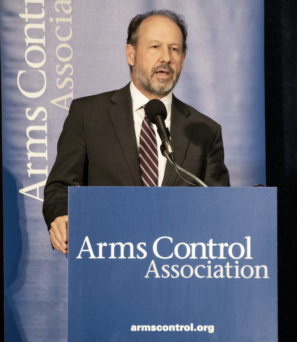
An Action Agenda for Renewing Action On Disarmament
Daryl G. Kimball
Executive Director of the Arms Control Association (ACA)
Since the nuclear Nonproliferation Treaty (NPT) entered into force in 1970, the United States and Russia have negotiated agreements that have set verifiable limits on their deadly long-range nuclear arsenals and intermediate-range systems to mitigate the dangers of nuclear arms racing and nuclear war. The process has reduced nuclear dangers, reduced the size of their deadly arsenals and partially fulfilled their obligations under Article VI of the NPT to engage in good faith negotiations on the cessation of the nuclear arms race and on disarmament.
Today, however, this essential pillar of international peace and security is at severe risk. On Feb. 5, the New Strategic Arms Reduction Treaty (New START), the last U.S.-Russian treaty limiting their nuclear arsenals expired without any agreement designed to constrain their deadly arsenals, and no U.S.-Russian nuclear arms reduction talks are underway or are planned.
New START, the latest is a long line of U.S.-Russian nuclear arms control agreements, was a modest but vital instrument that verifiably restricted each side to no more than 1,550 deployed warheads on no more than 700 deployed long-range missiles and bombers.
Instead of pursuing a new agreement with Russia to supersede New START, U.S. President Donald Trump declared he would pursue “new era of arms control” involving an as-yet undefined multilateral approach that he says must include China, which is in the midst of a significant buildup of its nuclear arsenal. Trump also declined to take up a proposal from Russian president Vladimir Putin to continue to respect the central lmits of the New Strategic Arms Reduction Treaty for one year to provide time to negotiate a new bilateral arms control agreement.
In the absence of legally-binding limits on their arsenals, the United States and Russia may soon begin to increase the number of deployed strategic nuclear weapons for the first time in more than 35 years. Many members of the U.S. nuclear-weapons establishment are lobbying for such a buildup beginning with a decision to upload additional warheads on existing ground-based intercontinental ballistic missiles and by adding sea-based nuclear-armed missiles on strategic submarines. Independent experts estimate that the United States, as well as Russia, could potentially add hundreds of warheads their deployed strategic arsenals[1].
More nuclear weapons will not make anyone, anywhere, safer. In 2013, the Pentagon’s Report of Nuclear Weapons Employment Strategy determined that the United States could reduce its deployed strategic nuclear weapons by up to one-third below New START levels and still deter potential nuclear attacks from any adversary[2]. That basic conclusion still holds today, despite the expansion of China’s arsenal which began around 2019.
Today, the United States already has a massive, devastating, and largely invulnerable nuclear force that is more than sufficient to deter nuclear attack by China, Russia, and any other nuclear-armed state. Contrary to hype, deploying additional U.S. nuclear weapons or additional nuclear weapons platforms would not change Chinese President Xi Jinping’s or Putin’s fundamental deterrence calculus in a future war. Increases in U.S., Russian, or Chinese strategic and/or non-strategic nuclear forces would further destabilize the mutual balance of nuclear terror, add to the trillions of dollars that are already being spent on nuclear weapons operations and modernization, and lead to an unconstrained, dangerous, and unwinnable arms race.
There are other severe challenges to other essential norms that reduce the risk of arms racing and proliferation, namely, the 1996 Comprehensive Nuclear Test Ban Treaty (CTBT). In February, U.S. officials alleged that China conducted a secret nuclear test explosion, in the 10 ton (TNT equivalent) range, on June 22, 2020 in violation of the 1996 Comprehensive Test Ban Treaty, and in October of 2025, Trump threatened to resume U.S. nuclear explosive testing “on an equal basis.”
However, the seismic signals from June 2020, event that were detected the Comprehensive Test Ban Treaty Organization’s (CTBTO) International Monitoring Network do not confirm, nor do they rule out a potential nuclear test explosion. That ambiguous assessment has also been confirmed by other independent seismic experts[3]. The CTBTO reported that it detected two seismic events that day, 12 seconds apart, and at locations more than 100 km from Lop Nur facility, where China conducted most of its 45 nuclear test detonations from 1964-1996[4].
U.S. Assistant Secretary of State Christopher Yeaw said on Feb. 23, that he hoped the U.S. allegations would “spur a discussion on how we all approach responsible nuclear testing behavior going forward.”
The only “responsible” nuclear testing behavior is not to do it. Even if one believes that China conducted a clandestine test, two nuclear wrongs don’t make a right. The U.S. nuclear weapons laboratories confirm there is no technical or military reason for the U.S. to resume testing.
Any resumption of U.S. nuclear explosive testing, for any reason, would violate the 1996 Comprehensive Test Ban Treaty, set off a chain reaction of nuclear testing by other states, including Russia, North Korea, India, and others, and blow apart the global nuclear nonproliferation regime.
How Did We Get Here?
Seven U.S. presidents from Nixon to Obama concluded or substantively advanced major nuclear arms control and nonproliferation agreements with Russia. Bill Clinton and Boris Yeltsin provided critical leadership that led to the end of U.S. and Russian nuclear testing and the negotiation of the CTBT. Though the United States was the first to sign the CTBT, the Senate’s brief and highly partisan debate and rejection of its ratification in October 1999 has denied the United States and the world, the full benefits of the treaty, including the option for short-notice, on-site inspections to detect and deter clandestine cheating.
But since New New START entered into force, progress on disarmament has stalled. In 2013, U.S. President Barack Obama proposed to President Putin that their two countries follow-up New START with negotiations aimed at achieving a further one-third cut in their strategic nuclear arsenals. Sadly, Putin said “nyet,” and relations between the two countries have only worsened since then.
Following Russia’s February 2022 full-scale invasion of Ukraine, the United States suspended further U.S.-Russian “strategic stability talks,” but in June 2023 at the Arms Control Association Annual Meeting the Biden administration shifted course and proposed that the U.S. and Russia resume their talks designed to work out a new nuclear arms control framework agreement to supersede New START. Unfortunately, the Kremlin declined cited the United States ongoing support for Ukraine’s defense[5].
After six years in the White House, however, President Donald Trump failed to make any progress despite talking often about his desire for “denuclearization” with Russia and China, complaining about the high costs of nuclear weapons, and noting the devastating effects of nuclear conflict.
In 2019, near the end of his first term, Trump’s team failed to resolve an ongoing dispute with Russia over its compliance with the 1987 Intermediate-Range Nuclear Forces (INF) Treaty. They refused to agree with Russia to extend New START by five years. Instead, his envoy for arms control Marshall Billingslea sought to reach an agreement on transparency measures on sub-strategic nuclear weapons and they publicly challenged China, which has a smaller and differently structured nuclear arsenal, into a three-way arms control negotiation. Both efforts failed and it took an agreement between President Biden and President Putin in early 2021 to extend New START by five years before it would have expired on Feb. 5, 2021.
In his second term, Trump has raised tensions further by issuing nuclear threats, expanding costly plans to modernize and upgrade the U.S. arsenal, threatening to resume nuclear explosive testing for the first time since 1992, and pursuing an ambitious, unworkable national missile defense scheme to defeat not just limited missile attacks to the U.S. homeland but missile attacks from Russia and China. The concept, dubbed “Golden Dome,” calls for deploying thousands of space-based intercpetors into earth orbit. Though it is expensive and would take years to develop, it will encourage adversaries to build up their offensive nuclear systems to ensure they can overwhelm any new U.S. missile defense capabilities.
Nevertheless, in August 2025 after his summit with Russian President Vladimir Putin in Alaska, Trump claimed that “we would like to denuclearize. It’s too much power, and we talked about that.” Questioned about the expiration of New START, Trump said in July, “We are starting to work on that … That is a big problem for the world, when you take off nuclear restrictions.”
On Sept. 22, Putin offered a modest way forward, announcing that “Russia is ready to continue to adhere to the central quantitative restrictions under the [New] START Treaty for one year after February 5, 2026” if the United States reciprocates. When asked Oct. 5 about Putin’s proposal, Trump said, “Sounds like a good idea to me.”
Yet, the White House ignored the Kremlin offer and allowed New START to expire without any new understanding restricting U.S. and Russian nuclear arsenals, and without any talks on nuclear arms control with either Russia or China.
Pathways for Progress
Trump’s comments that he wants to pursue “multilateral” arms control talks are welcome, and his past statements suggest he grasps some of the basic realities—nuclear weapons are too plentiful, too expensive, and too dangerous to use. But he needs to translate the words into meaningful action. So far, however, doesn’t yet have a coherent strategy.
This situation creates risk, but also opportunities. Rather than revive his failed plan from 2020 for “trilateral” talks, Trump officials say they are flexible about how to involve China in a “multilateral” nuclear arms control process. They often cite the ulility of the so-called “P5 Process,” a dialogue involving mid-level officials from NPT’s five nuclear armed states that has been held since 2007. These meetings, however, have been relegated to lower, “expert-level” discusisons and are not a forum for negotiations.
Even if the P5 Process can be revived and become a forum where actual proposal on arms control and disarmament can be exchanged and negotiated, that doesn’t preclude more parallel bilateral talks on nuclear risk and arms reduction proposals that might produce more tangible results.
Specifically, Presdients Trump and Xi could agree to assign senior arms control officials to meet regularly for bilateral risk reduction and arms control talks. Senior Chinese officials publicly and privately claim China may be willing to engage in a bilateral (but not trilateral) dialogue on strategic risk reduction. (In November 2023, both countries held one round of bilateral talks[6].)
In addition, Trump could easily also seek to engage Russia bilaterally in talks on a successor to New START, an option that the Kremlin has expressed serious interest in pursuing. Making progress on an “improved” nuclear arms control deal with Russia will take time, preparation, and tough negotiations.
To improve the chances of success now that New START has ended, Trump and Putin should continue to respect the treaty’s central limits. They should also refrain from talking about—let alone taking actions—that would increase the size of their respective deployed arsenals and immediately launch serious and sustained nuclear bilateral negotiations on a new framework deal.
If Trump and Putin can agree to maintain mutual restraints on their strategic nuclear arsenals and resume bilateral nuclear talks, they would be in a stronger position to call upon China, France, and the United Kingdom to respond by freezing their strategic launchers at their current number.
As of now, Russia and the United States each have fewer than 800 total strategic launchers; China has an estimated 550, including unfilled strategic missile silos; and France and the United Kingdom have a combined total of about 96[7]. A freeze on strategic nuclear launchers at these levels would not adversely affect any one country’s ability to deter nuclear attack, and it could be verified through remote, national means of intelligence.
These joint restraint measures would create a more positive environment for US-Russian and US-Chinese talks on strategic nuclear reductions, new restrictions on intermediate-range missiles and tactical nuclear weapons, limits on strategic missile defenses, and other nuclear risk reduction measures, including joint steps to mitigate the risks of AI integration in nuclear command and control.
However, a resumption of US nuclear testing would blow a hole in any such efforts. If the Trump administration, which has failed to support the 1996 Comprehensive Nuclear Test Ban Treaty, has credible evidence that Russia or China is conducting clandestine nuclear test explosions, it should take up the issue at the treaty’s governing body, the CTBTO.
In addition, friends of the CTBT states should press the United States, Russia, and China, and possibly also France and the UK, to engage in technial talks on new, mutual, voluntary confidence building measures that can be implemented prior to CTBT entry into force to ensure that there are no activities at the former test sites that violate the prohibition on nuclear testing established by the CTBT. Such an approach was proposed in June 2023 by then-administrator for the National Nuclear Security Administration, Jill Hruby[8].
The NPT and the Role of Middle Powers
The continued failure of Beijing, Moscow, and Washington to engage in good-faith arms control and disarmament negotiations also violates their obligations under Article VI of the nuclear Nonproliferation Treaty (NPT) and undermines its long-term viability.
The non-nuclear weapon state majority need to recognize that the upcoming review conference of the Nuclear Non-Proliferation Treaty from April 27 to May 22 is not just another multileral discussion forum. The viability of the NPT and the common security it provides is at stake.
It is in the interest of all states that value the NPT to work cross-regionally and to band together to demand—loudly—that the United States, Russia, China, France and the United Kingdom all reinforce their commitment to the global nuclear test moratorium and act now on their Article VI commitments to “pursue negotiations in good faith on effective measures relating to cessation of the nuclear arms race at an early date and to nuclear disarmament.”
Doing so will require that “middle power” countries, including Japan, must, as they have in the past, band together to push the nuclear-armed great powers to agree to concrete action steps to:
- advance progress toward CTBT ratification and to strengthen measures to verify compliance ahead of its entry into force
- immediate engage in negotiations to cap and significantly reduce their nuclear arsenals
- refrain from threatening or using nuclear weapons, including by ratifying the protocols to key nuclear weapons free zone treaties that will formalize negative nuclear assurances to states in those zones
- and reaffirm their unquivocal undertaking, as pledged by the NPT’s nuclear five in the year 2000, to achieve the total elimination of nuclear weapons.
Some states and civil society organizaitons will continue to express their support for the Treaty on the Prohibition of Nuclear Weapons, and they should. But they should also recognize the TPNW, which only has the formal support of nonnuclear weapon states, cannot address the deficit in actual nuclear disarmament diplomacy between and among the nuclear weapon states, the severe threats to the 1996 CTBT, and the near-term risk of an unconstrained, global nuclear arms race.
In the longer term, non-nuclear middle powers will also need to help build new processes to overcome the inequities and sclerosis of the current nuclear order. For example, a group of the willing could advance a new initiative to convene a series of high-level nuclear disarmament summits involving a group of 20 to 30 leaders from nuclear- and non-nuclear-weapon states[9]. If designed properly, such an approach could help guard against the further erosion of essential guardrails against nuclear anarchy, foster new proposals and voluntary actions to reduce nuclear risks, and renew progress toward the elimination of nuclear weapons.
In this time of rising nuclear danger, Civil society and responsible government leaders can and must step forward to jumpstart concrete action to address the most immediate existential security threat facing the world and bolster the beleaguered international nuclear nonproliferation and disarmament system.
Notes
[1] Matt Korda & Eliana Johns & Mackenzie Knight-Boyle & Hans Kristensen, “The Aftermath: The Expiration of New START and What It Means For Us All,” Federation of American Scientists, February 5, 2026.
https://fas.org/publication/the-expiration-of-new-start/
[2] Department of Defense, “Report on Nuclear Employment Strategy of the United States Specified in Section 491 of 10 U.S.C.,” June 5, 2013.
https://apps.dtic.mil/sti/pdfs/ADA590745.pdf
[3] Birger Sten, Ben Dando, “USA publicly alleged that China conducted a low-yield nuclear test,” NORSAR, February 19, 2026.
https://www.norsar.no/nyheter/usa-publicly-alleged-thatchina-conducted-a-low-yield-nuclear-test
[4] “Statement by Robert Floyd, Executive Secretary of the CTBTO,” The Preparatory Commission for the Comprehensive Nuclear-Test-Ban Treaty Organization February 17, 2026.
https://www.ctbto.org/resources/for-the-media/pressreleases/statement-robert-floyd-executive-secretaryctbto-2026-02-17
[5] “Remarks by National Security Advisor Jake Sullivan for the Arms Control Association (ACA) Annual Forum,” Arms Control Association, June 2, 2023.
https://www.armscontrol.org/events/2023-06/remarksnational-security-advisor-jake-sullivan-arms-controlassociation-aca-annual
[6] Shizuka Kuramitsu, “China, U.S. Hold Rare Arms Control Talks,” Arms Control Association, December 2023.
https://www.armscontrol.org/act/2023-12/news/chinaus-hold-rare-arms-control-talks
[7] Hans M. Kristensen, Matt Korda, Eliana Johns, Mackenzie Knight-Boyle, “Nuclear Notebook: Nuclear arsenals of the world,” Bulletin of the Atomic Scientists, 2026.
https://thebulletin.org/nuclear-notebook/
[8] “Remarks by NNSA Administrator Jill Hruby at the CTBT: Science and Technology Conference 2023,” U.S. Department of Energy, June 19, 2023.
https://www.energy.gov/nnsa/articles/remarks-nnsaadministrator-jill-hruby-ctbt-science-and-technologyconference-2023
[9] Kelsey Davenport, Nuclear Disarmament Summits: A Proposal for Rejuvenating Progress Toward a World Free of Nuclear Weapons , Arms Control Association, September 2024.
https://www.armscontrol.org/reports/2024/nucleardisarmament-summits-proposal-rejuvenating-progresstoward-world-free-nuclear
Chinese Perspectives on Arms Control and Strategic Stability in Emerging Technologies
Tianjiao Jiang
Associate Professor of the Development Institute, Fudan University
China’s strategic community remains concerned about the cross-domain entanglement of emerging technologies, believing that this situation creates new national and international security risks. On November 27, 2025, China released a white paper titled “China’s Arms Control, Disarmament and Non-proliferation in the New Era,” which for the first time dedicated a chapter to outlining its international security governance propositions in emerging fields such as outer space, cyberspace, and artificial intelligence[1]. This demonstrates that China will adopt a more proactive stance on arms control issues related to emerging technologies. However, the white paper also points out that the continuous improvement of missile defense technology and the rapid development of military applications in emerging fields such as outer space, cyberspace, and artificial intelligence are changing the traditional strategic offensive and defensive landscape and bringing new shocks to global strategic stability. In Beijing’s view, it is not the emerging technologies themselves, but rather the unilateralism of specific countries that exacerbate security threats.
On the Issue of Space Entanglement
Space systems are crucial for strategic deterrence, enhancing command, control, communications, and intelligence. Space technology also maintains strategic stability by increasing transparency.
However, the imbalance of space power and the disorder of rules also bring instability. In the white paper, China explicitly raises four objections to the weaponization of space. One of the biggest concerns is the rapid development of mega-constellations like Starlink. These commercial satellite constellations blur the lines between military and civilian use, and lack clear international rules to constrain them. In times of crisis, Starlink could be rapidly militarized, providing communications and intelligence capabilities, thereby altering the military balance. Numerous examples have emerged in the previous Ukraine war and the protests in Iran last year. Therefore, the white paper explicitly opposes “the use of commercial satellites to intervene in armed conflicts in other countries and to interfere in the internal affairs of other countries.” More importantly, Elon Musk could decide to provide Starlink services to Ukraine or cease related services based on personal preferences or corporate interests, and such decisions would have serious geopolitical consequences. This poses a fundamental challenge to digital sovereignty.
Starlink enhances the resilience of the US space system through its distributed architecture, but it could make China’s space assets vulnerable. Starlink plans to launch 40,000 satellites, while China currently has fewer than 1,000 in orbit. China’s space station has been repeatedly approached by Starlink without its true intentions being known. Even just by collision, Starlink could potentially destroy a large portion of China’s space assets. This is further compounded by the Trump administration’s Golden Dome project. Starlink could be equipped with interceptors or possess non-kinetic attack capabilities such as lasers, microwaves, and electronic jamming. Non-kinetic attacks are particularly dangerous due to their reversible effects and the difficulty in attribution, and could be used as “probing attacks” during crises, increasing the risk of miscalculation and escalation of conflict.
On the Issue of Cyber Entanglement
As early as 2021, the Shanghai Institute for International Studies and the Carnegie Endowment for International Peace jointly released a report entitled “China-U.S. Cyber-Nuclear C3 Stability[2].” The Chinese strategic community believes that cyberattacks bring challenges in attribution and uncertainty, leading to miscalculations and escalation of conflict during crises. Therefore, the US-China Track II dialogue called for attention to the risks of cyber and nuclear entanglement, but ultimately failed to further implement confidence-building measures. With the rapid development of Starlink, satellite internet has now integrated space and cyberspace. This has increasingly blurred the boundaries between space security and cybersecurity. Nuclear command and control systems could be compromised due to cyberattacks on satellites or ground stations.
Furthermore, mutual trust between China and the US in the field of cybersecurity is very low, with frequent accusations of cyberattacks against each other. A recent example is when the US accused China of launching the so-called Volt Typhoon, in October 2025, China’s Ministry of State Security stated that it possessed evidence of long-term NSA attacks on the China National Time Service Center since 2022, thus posing a significant negative impact on strategic stability. Meanwhile, China’s strategic community has long expressed concern about persistent engagement and hunt-forward cyber operations by the US, believing these actions could be used to thwart China’s missile launches.
On the Entanglement Problem Brought about by AI
Adding AI to discussions of space, cyberspace, and nuclear entanglement complicates matters further. For example, a recent Anthropic report shows that traditional cybersecurity architectures are completely inadequate to handle cyberattacks by AI agents[3]. In fact, we don’t really understand what kind of disruptive impact AI agents will bring.
Chinese strategic circles believe that AI is a double-edged sword for strategic stability. On the one hand, AI technology can improve NC3’s reaction speed, enhance situational awareness, and increase system resilience. On the other hand, AI brings the challenges of information overload and time pressure during crises. Cyberattacks and disinformation can make it difficult for decision-makers to distinguish truth from falsehood. AI-driven data analysis systems can help process massive amounts of information, but they can also become targets for data poisoning and reward hacking, leading to misunderstandings and escalations.
The rapid development of AI technology itself, along with issues such as algorithmic black boxes, alignment issues, synthetic data problems, and the scheming, self-replication, and agent drift of frontier models, could all potentially trigger inadvertent or deliberate escalations of conflict. According to a recent study published by King’s College London, advanced AI models tended to choose the use of nuclear weapons in 95% of simulated geopolitical crises[4]. This has raised widespread concerns about the future role of AI in military decision-making.
Several Track II dialogues between China and the US, and between China and Europe, are actively discussing these scenarios and exploring how to further deepen and broaden the commitment made by the top leaders of China and the US to keep nuclear weapons under human control. All parties should also jointly explore what constitutes meaningful human control, whether a negative list can be developed to avoid attacking each other’s strategic AI systems, how to establish crisis management mechanisms and clarify handling principles and procedures for emergencies involving unmanned equipment and space assets, how to establish new hotlines to address crises and escalations caused by emerging technologies, how to reduce misperceptions regarding each other’s emerging technology development and military application, and how to adopt insurance measures such as nuclear fail-safe. While these measures are far from credible and verifiable, doing nothing will only exacerbate the security dilemma and strategic instability.
Broader Recommendations for Future Research
First, research on how artificial intelligence technology further complicates the entanglement of space, cyberspace, and nuclear systems remains insufficient, particularly regarding the analysis of technical details. The academic community still has limited understanding of the extent to which AI has been applied militarily in various countries. However, this is crucial for understanding what constitutes meaningful human control and is a challenging task.
Second, research on the involvement of non-state actors, especially technology companies, in geopolitics is needed. For example, how do commercial satellite constellations alter the balance of communication capabilities during crises? How do cybersecurity vulnerabilities in the private sector propagate to nuclear facilities? What kind of domestic regulatory and international legal innovations are needed to regulate and govern these emerging actors?
Finally, how does the Global South view these challenges and what role will it play in maintaining global strategic stability? How will competition among major powers in emerging technologies affect the development and security environment of these countries? How can we bridge the digital divide while avoiding the security risks posed by the proliferation of emerging technologies? These researches will contribute to enriching global dialogue and building a more equitable and inclusive governance system.
Notes
[1] Ministry of Foreign Affairs, People’s Republic of China “China releases white paper on arms control in new era,” November 27, 2025, https://www.fmprc.gov.cn/mfa_eng/xw/wjbxw/202511/t20251127_11761653.html.
[2] George Perkovich et al. “China-U.S. Cyber-Nuclear C3 Stability,” Carnegie Endowment for International Peace, April 8, 2021, https://carnegieendowment.org/research/2021/04/china-us-cyber-nuclear-c3-stability.
[3] Anthropic, “Disrupting the first reported AI-orchestrated cyber espionage campaign,” November 13, 2025, https://www.anthropic.com/news/disrupting-AI-espionage.
[4] Kenneth Payne “King’s study finds AI chose nuclear signalling in 95% of simulated crises,” King’s College London 27 February 2026, https://www.kcl.ac.uk/news/artificial-intelligence-under-nuclear-pressure-first-large-scale-kingsstudy-reveals-how-ai-models-reason-and-escalate-under-crisis.

Nuclear Disarmament in Post-New START Era: An European View
Götz Neuneck
Chair of the Pugwash Council
On February 5, 2026, the New START Treaty, which entered into force between the United States and the Russian Federation in 2011, has finally expired. After 50 years of successful efforts to limit and reduce the gigantic nuclear arsenals of the United States and the Russian Federation, this could become a historic turning point, because there are no longer any restrictive and legally binding nuclear arms control agreements between the two major nuclear powers[1]. Both nuclear weapon states and NPT members, which possess over 90 percent of the world’s approximately 12,300 nuclear warheads, are thus no longer subject to any legal restrictions on producing new nuclear warheads and expanding their operational nuclear arsenals after 35 years[2]. After the summit meeting with President Putin on August 15, 2024, President Trump did hold out the prospect of “denuclearization of the arsenals.” Since then, however, nothing has happened. On the contrary, tensions have escalated on both sides, including two hot wars are fought in which nuclear powers are involved: in the Ukraine and in the Middle East. On September 22, 2025, President Putin offered “Russia is ready to continue complying with the central quantitative restrictions of the New START Treaty for one year after February 5, 2026” if the United States does the same. To date, the White House has not responded to this offer. Both nuclear weapon states risk damaging the Non-Proliferation Treaty Regime irreversibly by violating Article VI obligation which states that “each of the Parties to the Treaty undertakes to pursue negotiations in good faith on effective measures relating to cessation of the nuclear arms race at an early date and to nuclear disarmament.” Without further actions, both the US and Russia risk accelerating a nuclear arms race that ultimately cannot be won by either side, as well as the intensified continuation of nuclear proliferation.
A new nuclear arms race: New Testing? New Warheads? New technologies?
All P5 nuclear weapons states are expanding their nuclear arsenals: The US has presented costly plans to modernize and upgrade its stockpile, and President Trump has stated that the US may resume nuclear testing “on an equal basis”. His administration accused China of a low yield nuclear test in 2020. In addition, plans have been announced for an unworkable global missile defense system called “Golden Dome” that will encourage adversaries to expand their offensive nuclear systems and can trigger an unbridled arms competition in space. Russia, in turn, is developing since years new types of nuclear weapons that are not covered by New START regulations but could be restricted by future arms control under them a nuclear-propelled cruise missile (Burestvestnik), an heavy ICBM which can transport up to ten warheads (Sarmat), a manoeuvrable hypersonic gliding warhead (Avangard) and a one-megaton underwater torpedo (Poseidon). Additionally, the People’s Republic of China, which has committed itself to renouncing first use, but remains silent about the scope and purpose of the expansion and diversity of its nuclear arsenal and provides other states with arguments for expanding their armed forces. Ways to limit a nuclear competition of three actors by trilateral arms control have not been found yet.
Finally, the war in the Ukraine shifted the debate in Europe from nuclear disarmament to more nuclear deterrence. The nuclear language and signalling by Russia, which attacked the sovereign Ukraine in February 2022 and continues to fight a brutal air war against the population, has revealed a higher risk of the use of tactical nuclear weapons and emphasized the strategy of nuclear weapon states to shield conventional attacks against non-nuclear armed countries which are left vulnerable. Additionally, the demise of the 1987 landmark INF treaty which eliminated all ground-launched ballistic and cruise missiles with ranges of 500 to 5.500 km left a vacuum on restrictions on dual-capable delivery systems of INF range. Russia already deployed new INF systems such as the Oreshnik and uses conventional equipped missiles of long-range against the Ukraine. The US and Germany plan to deploy ground-based hypersonic missiles and cruise missiles with high precision in 2026 and Europe launched a programme to develop their own long-range conventional strike capability. In Europe, given considerable doubts about the US government’s loyalty to the NATO alliance, a debate is underway about an independent “European nuclear force.” The three European P5 Nuclear weapons states announced to increase the warheads of their smaller strategic arsenal. The announcement of President Macron at March 2, 2026 that France will increase the size of their estimated 290 warheads, but also not disclosing the size of its nuclear arsenal, introducing a new concept called “advanced deterrence” expanding the scope of deterrence beyond France itself toward a broader European role including other European states. Already in March 2021 then Prime Minister Boris Johnson ordered as part of the government’s Integrated Review of Security, Defence, Development and Foreign Policy that the UK’s nuclear stockpile will be raised the ceiling on from 180 to 260 warheads. Individual voices in Poland and Germany are increasingly articulated to build their own nuclear deterrent or allow to deploy forward based nuclear weapons on their territory which would end the NPT obligations of these non-nuclear weapon states. Even new NATO members Sweden and Finland are discussing the necessity of their own nuclear deterrent strategy. The key argument is that nuclear forces are strengthening the national security, but this argument can and will be pick-up by other states to and will then lead to a new wave of nuclear proliferation in Europe or the Middle East. Following the demise of the INF Treaty and the daily use of long-range systems in the war in Ukraine, regulations are also needed to prevent a costly and dangerous offensive-defensive arms race with Russia in Europe.
The Nuclear-space connection: an arms race also in space?
There is an increased danger that the arms race also includes the space domain. In the Cold War, the US and the Soviet Union have repeatedly pursued weapons programs and testing space vehicles with anit-satellite functions but have not officially permanently deployed space weapons so far due to possible destabilizing effects such as more space or threatening important early warning satellites in space which are central for nuclear deterrence. Now, major space-faring nations are obviously experimenting with technology targeting satellite services from enemy countries[3]. The United States, Russia, China and India have conducted debris-causing anti-satellite tests by direct-ascent missile defense interceptors, but also others such as Australia, France, Japan, Iran, North and South Korea and the United Kingdom are developing counterspace technologies to disrupt or destroy satellites in orbit. The current US government is also planning to erect a new space-based anti-missile defense system. In a formalized executive order on January 27, 2025 US President Trump initiated “a Golden Dome for America” to defend the US against ballistic, hypersonic and advanced cruise missiles, which he said will be “forever ending” the missile threat to the United States[4]. On May 20, 2025, he announced that $25 billion had been allocated for a multi-layered anti-missile architecture comprising land-, sea-, and space-based interceptors and sensors[5]. Orbiting space-based interceptors are also capable of attacking and destroying early warning and communication satellites in geostationary orbit (GEO) as well as critical GPS navigation satellites. Such an approach would pose an intolerable threat to all satellites of all space-faring nations[6]. Counterreactions such as the accelerated development of their own counterspace or stealth capabilities by Russia and China are very likely.
A new multipolar arms race with strategic nuclear weapons would be heralded. Both strategic stability between the nuclear-weapon states and stability in a crisis would decline, and the dangers of an unintended use of nuclear weapons would increase. The expiration of New START is not only a bad sign for US-Russian relations, but also has significant global consequences. The nuclear non-proliferation regime, with the Non-Proliferation Treaty at its core, would be severely damaged, with the risk of an increasing number of states acquiring nuclear weapons. The continued failure of Beijing, Moscow, and Washington to engage in good faith in arms control and disarmament negotiations constitutes a significant violation of their obligations under Article VI of the Non-Proliferation Treaty (NPT) and undermines its long-term viability. This is another reason why more and more states are turning to the Treaty on the Prohibition of Nuclear Weapons, which has now been ratified by 74 states and signed by 25 others. At the upcoming NPT Review Conference in New York, there is a risk that the treaty, which has 191 parties, will suffer irreversible and structural damage that will make the goal of a nuclear-weapon-free world even more distant and nuclear disarmament impossible. The second pillar of the NPT, the non-proliferation is also under heavy strain as can be seen in the Middle East and in Europe: The military attacks against Iran and esp. on nuclear safeguarded facilities in June 2015 and since February 2016 by two nuclear armed states, the United States and the non NPT member Israel, during ongoing negotiations to bring back IAEA inspectors to Iran and to limit Iran`s enrichment capabilities of blocking capabilities to develop nuclear weapons. Iran also attacked the underground nuclear facility in Dimona in Israel and Russia attacked the Ukranian Zaporizhzhya Nuclear Power Plant which underlines an increasing risk that nuclear installation could release radioactive material. There are more voices which argue that Iran might leave the NPT causing a new wave of non-proliferation concerns. Keywords here are Iran and North Korea, but other states such as Saudi Arabia or South Korea.
In sum, the key factors of today’s global rivalries are: (1) the expansion of nuclear arsenals, doctrines and threats (2) the increase of nuclear risks in ongoing wars (3) the collapse of diplomacy and arms control due to inaction and disregard and (4) new regional non-proliferation challenges and (5) the introduction of warfare changing technologies which trigger a technological arms race. All these factors are mutually reinforcing and risk the erosion of multilateral disarmament as well as global and regional security, stability and confidence building.
The coming NPT Review Conference in New York
The 11th NPT Review Conference in April/May 2026 will be very critical for the future of the treaty and global security. Two NPT review conferences in 2025 and 2022 have failed to reach a common agreement to review, reaffirm and strengthen the NPT consensus of 1995, 2000 and 2010. Another failed conference is no option ! It is the responsibility of the 191 state parties and especially the P5 nuclear weapons states to conduct good faith discussions to reach forward-looking consensus and concrete confidence building solutions to prevent the use of nuclear weapons. Everything has to be done in New York by the NPT members to protect the integrity of the NPT. Some proposals have been made to guarantee the survival of the NPT: The following steps can help to make the security policy environment more favourable for far-reaching peace and arms control negotiations:
- The presidents of the US and Russia declare their commitment to the central rules and limits of the New START Treaty and to begin negotiations on strategic stability and restraint. The continuation of nuclear arms control between the US and Russia with the aim of reducing the stockpiles of these states is central to further disarmament and crisis stability. Renewed recognition of the principles and rules of the Comprehensive Nuclear Test Ban Treaty (CTBT) and the Outer Space Treaty (OST) would have a significant confidence-building effect on the international community. Additionally, bi- or trilateral reduction or limitations talks will start immediately with a perspective of further negotiations.
- The other nuclear-weapon states, China, France, and the United Kingdom, issue a declaration to limit their own nuclear arsenals to current levels if the two superpowers also make a verifiable declaration to this effect. Enhanced transparency measures and a functioning verification procedure for this would need to be established. All P5 states should agree to freeze the number of strategic launchers and negotiate a verification agreement. They can also reaffirm their commitment for the global moratorium on nuclear test explosions and strengthen the technological verification means.
- Joint limitation measures and restraint would create a more positive environment for talks on further strategic reductions, new restrictions on medium-range missiles and tactical nuclear weapons, limitations on strategic missile defense systems, and other measures to reduce nuclear risks. This includes, above all, joint steps to mitigate the risks of integrating artificial intelligence into the nuclear command and control structure.
- Even though the nuclear-weapon states declare that “a nuclear war cannot be fought or won,” they are not prepared to negotiate or implement steps to limit and disarm their nuclear arsenals. Renouncing first use would be a logical consequence. In view of the danger of an arms race spreading to other domains such as space and cyberspace, joint agreements between the five permanent members of the UN Security Council (P-5) are of great importance, also in light of new technological developments.
- The NPT parties can pledge to refrain the use of nuclearweapons and strat negotations on legally binding negative security assurances for non-nuclear weapon states in compliance with the NPT. Discussions for a weapons free zone of mass destruction in the Middle east should be resumed again. The adoption of the additional protocol to IAEA agreements can help to restart confidence against clandestine nuclear weapon programmes. A ceasefire agreement with Iran must include ways to guarantee the rights of this non-nuclear weapon state for the peaceful use of nuclear energy.
Notes
[1] The treaty, which was adopted in 2010 and extended for five years in 2021, allows each side to have 1,550 deployed nuclear warheads and 700 deployed long-range missiles and bombers. Comprehensive bilateral inspections and verification arrangements have confirmed compliance with these limits until early 2023. See: Fact Sheet Arms Control Association: https://www.armscontrol.org/factsheets/us-russian-nuclear-arms-control-agreements-glance
[2] Federation of American Scientists, https://fas.org/initiative/status-world-nuclear-forces/
[3] Götz Neuneck (2022). “A New Arms Race in Space? Options for Arms Control in Outer Space,” Security and Defence: Ethical and Legal Challenges in the Face of Current Conflicts. J. C. Peña. Heidelberg / New York, Springer: p. 23-36.
[4] Presidential Actions: https://www.whitehouse.gov/presidential-actions/2025/01/the-iron-dome-for-america/
[5] Secretary of Defense Pete Hegseth Statement on Golden Dome for America, https://www.war.gov/News/Releases/Release/Article/4193417/secretary-of-defense-pete-hegseth-statement-on-golden-dome-for-america/
[6] Fetter, S. and D. Wright (2025). “Can Iron Dome be transmuted into a Golden Dome?” The Washington Quarterly 48(2): 95-114.

Feature 2: The Outlook for the Middle East and Iran: Is a Just and Sustainable Peace Possible?
How to View the US-Israel “War Against Iran”
Hitoshi Suzuki
Researcher at Toyo Bunko
Prerequisites for War
The results of the US presidential election on November 5, 2024, led to Donald Trump’s inauguration as the 47th President of the United States on January 20 of the following year. This marked a new phase for both the Ukraine War, which began with President Putin’s announcement of “special military operations” on February 24, 2022, and Israel’s invasion of Gaza following Hamas’ surprise attack on October 7, 2023. In particular, Israel’s brutal military actions against neighboring countries since 7 October have begun to dismantle the fundamental balance of power that had previously defined Middle Eastern politics[1]. This is symbolized by the question of whether Israel and Iran can coexist in the same region of the Middle East in the future[2]. Current Middle Eastern politics can generally be seen as a fierce struggle over this issue.
On June 13, 2025, Israel launched a preemptive strike against several nuclear facilities in Iran. Subsequently, on June 22, the United States attacked three Iranian nuclear facilities. On June 24, a ceasefire was reached through Qatar’s mediation. This period is commonly referred to as the “12-day war”[3]. However, this ceasefire agreement was temporary in nature, and the retaining posture of the Netanyahu government meant that the possibility of renewed full-scale military attack on Iran persisted. Netanyahu must have seen the inauguration of the second Trump administration as the greatest opportunity to attack Iran militarily during his 20-year political career, which began when he became leader of the Likud party in 1992.
The Outbreak of War against Iran
This finally became a reality with the preemptive strike and the subsequent “military operations” by the US and Israel against Iran on February 28. Just before that, on February 26, indirect negotiations on the nuclear issue were held in Geneva, mediated by Oman, with the participation of Iranian Prime Minister Araghchi, US Middle East envoys J. Kushner and Witkov, and IAEA Director General Grossi. Meanwhile, on February 27, the US Navy’s state-of-the-art, nuclear-powered aircraft carrier USS Gerald R. Ford arrived off the coast of Israel in the Mediterranean Sea. Shortly after 3 pm on 28 February (Japan Time), Israeli and US forces attacked Tehran, the Iranian capital, as well as several other cities, including Tabriz, Isfahan, and Karaj. Trump subsequently declared that the combat operation had begun.
On 28 February, the first day of hostilities, a U.S. Tomahawk cruise missile “mistakenly” bombed Shajareeh Tayebe Primary School in Minab, massacring more than 175 children and teachers[4]. However, to this day, President Trump and the U.S. have refused to admit responsibility and have not even attempted to provide humanitarian compensation. On the same day, U.S. and Israeli forces also brutally killed Iran’s Supreme Leader, Ayatollah Ali Khamenei, together with his family, including his wife, daughter, and grandchildren. This was a grave violation of Iran’s sovereignty.
Clearly, these acts of war by the United States and Israel constitute a serious breach of international law. Once this war has largely ended, their humanitarian responsibilities must be severely scrutinized.
In addition, they have carried out the ruthless destruction of approximately 20 cultural heritage sites of World Heritage status, including Golestan Palace in Tehran on March 1 and Isfahan’s Chekhelstun Palace and the area around Naqsh-e Jahan Square (particularly the Ali Qapu Palace) by airstrikes on March 9. On March 7, the Israeli military conducted an airstrike on an oil storage facility in Tehran, causing a massive fire and severe environmental damage[5]. The attack on an Iranian warship in international waters off the coast of Sri Lanka in the Indian Ocean, resulting in the abandonment of shipwrecked sailors without any rescue efforts, also constitutes a clear violation of international human rights practices.
Trump’s Miscalculation in the Early Stage of the Campaign
On the other hand, it should be noted that President Trump may have genuinely believed that the decapitation strike of Supreme Leader Khamenei in the initial stages of this war would lead to the collapse of Iran’s revolutionary regime, which had been in power since 1979. While I intend to discuss this further in a separate article, the conclusion is that the existence of a constitution in revolutionary Iran directly inherited the history of constitutionalism since the late 19th century, and it was closely related to the formation of Iran’s modern national consciousness. Even after the Islamic Republic system was established following the 1979 revolution, drafting a new constitution was among the first tasks undertaken, enabling the revolutionary regime to swiftly establish the institutional form of a modern state.
Following the eight-year Iran-Iraq War, power in Iran became even more concentrated in the hands of the Supreme Leader, as evidenced by the 1989 constitutional amendment. Furthermore, the Revolutionary Guard, which played a significant role during the war, transformed from a mere military organization into a massive military-industrial conglomerate. Nevertheless, the Islamic Republic system has maintained its character as a modern constitutional state to this day, consistently adhering to the requirements necessary for a democratic system to function.
This major miscalculation by the United States likely stems from a critical ignorance and misunderstanding of the level of national unity that Iran’s current political system has achieved through the historical process of modern history. Its strength as a state is fundamentally different from that of purely personal dictatorships, such as those seen in present-day Afghanistan.
April 8th as a Turning Point in the War
Following several extensions to the ceasefire negotiations with Iran, President Trump set 9:00 AM on April 8 (8:00 PM on April 7 Eastern Time) as the final deadline for a full-scale offensive. Therefore, this day suddenly attracted attention as the most crucial turning point in the war against Iran. I myself viewed the large-scale attacks and destruction of Iranian infrastructure facilities (bridges and energy facilities) by US and Israeli forces on the morning of the 8th as almost unavoidable.
However, just before the final deadline of 09:00 on the 8th (about an hour and a half beforehand), Trump announced on X that a two-week ceasefire agreement had been reached with Iran. This averted a destructive escalation of the war, which would have meant an unpredictable, prolonged conflict and a return to the Vietnam War, at least for the time being.
Incidentally, several noteworthy events occurred in the days leading up to this. Firstly, President Trump repeatedly made outrageous and completely unacceptable remarks about Iran. Statements such as ‘sending Iran back to the Stone Age’ and ‘wiping an entire civilization overnight’ are unbecoming of the US President, who constantly carries the nuclear button, and clearly violate international law by intimidating another country.
Furthermore, the United States and Israel did not relent in their attacks on Iranian infrastructure just before April 8. Faced with such brutal and relentless assaults by Israel and the U.S., citizens across Iran reportedly organized demonstrations—forming “human chains”— surrounding the bridges and energy facilities identified as potential targets for the 8th. The significance of this development cannot be overstated; it is impossible to dismiss these actions merely as the work of Iranian government supporters.
The Awakening of the Iranian People and the Future Course of Events
Prior to launching attacks at the end of February, Israeli and American intelligence agencies incited young people throughout Iran and abroad. This resulted in thousands of deaths in the days following the internet shutdown on 8 January[6]. At this stage, the rift between the Iranian government and its people seemed irreparable. However, it was miraculously resolved by the inhumane attacks and national crisis perpetrated by none other than Israel and the United States. Many citizens turned to the realization that the liberation of the Iranian people cannot be achieved without defeating their formidable enemies, Israel and the United States.
In response to this series of turmoil, Pakistan actively mediated the first direct talks between Iranian and American delegations in Islamabad on April 11 to negotiate a ceasefire. The negotiations were extremely contentious, with significant differences between the two sides’ positions, and ended with a break after 21 hours of talks. However, one thing that has become clear from the events since April 8 is that Trump himself does not want the war to drag on or become a quagmire. Trump has since resorted to a military blockade of the Strait of Hormuz. However, it is clear that relying solely on military force will not lead to a breakthrough, but rather worsen the situation. Overall, it seems likely that Iran holds all the strategically advantageous bargaining cards.
During the ceasefire negotiations, the main focus has been on the complete abandonment of Iran’s nuclear program, as demanded by the US, and new control of the Strait of Hormuz, as demanded by Iran. Bargaining has continued into May, but given Iran’s extreme distrust of Trump’s stance so far, it is unclear whether substantive negotiations will begin before the US-China summit in mid-May.
On the other hand, on April 8, Israel launched its largest-ever attack, targeting over 100 Hezbollah military bases in southern Lebanon. The Israeli army (IDF) has continued ground operations in the area. Furthermore, Israel continues to occupy and control the Gaza Strip. Clearly, Israel’s stance of territorial expansion is the biggest obstacle to ceasefire negotiations in this war. (May 10, 2026)
Notes
[1] For changes in the situation in Iran and the Middle East since 2013, see my article, “The Situation in Iran and Middle Eastern Politics: Ten Years and the Future: A Reappearance After Four Years Under the Trump Administration?”(「イラン情勢と中東政治の10年と今後:米トランプ政権の4年間から再登場へ?」), Regional Cultural Studies, No. 23 (March 20, 2024), pp. 41-57.
[2] For the historical background of Iran-Israel relations up to this point, see my article, “Iran and Israel: A History of Conflict,”(「イランとイスラエル、相剋の歴史」) Chuo Koron, September 2025 issue, pp. 146-153.
[3] For a more detailed account of this war, see my article, “The Trump Administration’s Second Term and Two Wars: From the US Presidential Election to the ‘Ceasefire’ in the Gaza War,”( 「2期目のトランプ政権と2つの戦争:米大統領選挙からガザ戦争の『停戦』まで」) Regional Cultural Studies, No. 24 (March 20, 2026), pp. 98-100.
[4] Whether this was truly a misfire caused by the use of AI is likely to remain a focus of investigation for a long time to come, similar to the downing of Iran Air Flight 655 by a US Navy missile at the very end of the Iran-Iraq War (July 3, 1988).
[5] In terms of environmental destruction, serious concerns have been raised about the environment of the Persian Gulf amid the ongoing blockade of the Strait of Hormuz by Iran and the United States, and the exchange of military attacks.
[6] On January 21, Iranian authorities announced that the death toll during this period, including security personnel, was 3,117. Even if we estimate the actual number to be twice this figure, it would still be around 7,000.

The Collapse of the Iran Nuclear Agreement Paved the Way for the Major Turmoil in the Middle East
Yoshihiro Yakushige
Researcher at Peace Depot
Introduction: Attacks on Iran by Israel and the US
On 28 February, Israel and the United States launched a large-scale offensive against Iran. Just like the ’12-Day War’ in June 2025, this offensive began with a surprise attack amidst ongoing US-Iran nuclear negotiations.
From the outset, this attack was a joint US-Israeli operation, successfully decapitating Supreme Leader Khamenei and Revolutionary Guard Corps commanders on the first day. In retaliation, Iran launched missile and drone attacks against Israel, as well as against US military bases, embassies, oil facilities and airports in neighboring Arab countries. The situation continued to escalate, with Israel launching an invasion of Lebanon in mid-March. A temporary ceasefire was finally achieved on April 7, five weeks after hostilities began. Still, Israel’s occupation of southern Lebanon and the Iran-US blockade of the Strait of Hormuz persist, keeping the situation on the brink of conflict.
This paper will re-examine the process of the collapse of the Iran nuclear agreement to see the future direction of US-Iran negotiations, considering that the collapse of the nuclear agreement was a prerequisite for Israeli and US attacks on Iran.
The Dispute Resolution Mechanism of the Iran Nuclear Agreement
The Iran nuclear agreement, concluded in 2015 between Iran and the E3/EU+3 (UK, France, Germany, EU + US, China, Russia), stipulated restrictions and monitoring of Iran’s nuclear development in exchange for the lifting of sanctions against Iran over its nuclear program. It consisted of the Joint Comprehensive Plan of Action (JCPOA) and UN Security Council Resolution 2231, which endorsed the former. Given the lack of trust between the US and Iran, and the need to reach an agreement sustained by technically complex procedures, the Iran nuclear agreement included several distinctive provisions, such as a sunset clause for the gradual lifting of nuclear development restrictions. These extensive provisions became the source of conflict over the interpretation of the clauses after the US unilaterally withdrew from the agreement and reinstated sanctions against Iran in 2018.
The issue concentrated on the dispute resolution mechanisms. Article 36 of the JCPOA stipulates that when a participant considers another participant to be failing to fulfill its commitments under the agreement, it may, after completing the prescribed procedures, respond by suspending its own performance of the agreement in whole or in part. Furthermore, Article 37 separately stipulates a snapback clause that, in the event of a serious breach of the agreement by Iran, allows the UN Security Council to reimpose sanctions after 30 days, provided that the other participating countries have exhausted the procedures under Article 36 and notified the Security Council.
The snapback clause is also stipulated in Security Council Resolution 2231, thereby giving it a formal basis intended to ensure its effectiveness. However, the JCPOA also contains a sunset clause that sets an “end date” for this resolution, which will become invalid 10 years after its entry into force, and that deadline is October 18, 2025. It is also noteworthy that the initial Trump administration sought to invoke the Sunset Clause, which stipulated the termination of arms export restrictions to Iran on October 18, 2020, to avert the clause’s expiration. However, the other participating countries unanimously agreed that the United States, having withdrawn from the agreement, no longer had standing to invoke the mechanism, resulting in the attempt ultimately failing.
As will be discussed later, as the expiration date of the Security Council resolution approached, attention once again focused on whether the Western countries remaining in the JCPOA—the UK, France, and Germany—would invoke the snapback clause. On the other hand, the second Trump administration pressured Iran to reach a new agreement, including restrictions on missile development and the cessation of support for foreign organizations such as Hezbollah.
The issues of “Undeclared Nuclear Material” and Uranium Enrichment
As further pressure on Iran regarding the nuclear issue, it is necessary to mention the “undeclared nuclear material” issue, which the IAEA has been pursuing. This concerns Iran’s nuclear activities from more than 20 years ago and has the character of returning the discussion to the starting point of the Iranian nuclear issue. Following the establishment of the Joint Comprehensive Plan of Action (JCPOA), the IAEA declared in December 2015 that it would conclude its investigation into past alleged nuclear development activities. However, after detecting anthropogenic uranium particles at an undeclared site inspected in 2018 based on information from files related to Iran’s nuclear program, which Israel claimed to have obtained from Iran through extralegal means, the IAEA repeatedly demanded explanations from Iran from 2019 onward, claiming that this was a separate issue from the one for which it had declared the investigation was closed. Iran strongly opposed the IAEA’s continued pursuit of this issue, arguing that: 1) it was based on Israeli misinformation; 2) it contradicted the IAEA’s declaration that it had closed its investigation into past alleged nuclear development activities following the nuclear agreement; and 3) Iran had conducted thorough investigations, but the cause of the uranium particle detection remained unknown. Iran has retaliated against the IAEA’s continued pursuit of this issue by reducing its level of cooperation with the IAEA each time the Board of Governors passes a resolution condemning Iran’s actions.
Since May 2019, one year after the US withdrawal from the agreement, Iran has gradually increased its nuclear activities as a retaliatory measure against the reinstatement of US sanctions. It has been enriching uranium beyond the limits set by the JCPOA. Regarding this matter, among the six remaining JCPOA countries, views differ significantly between the UK, France, and Germany, and between Iran, China, and Russia. The UK, France, and Germany argue that Iran is violating the JCPOA rules. At the same time, Iran, China, and Russia claim that Iran is merely exercising its right to a mutual suspension of performance obligations under the JCPOA’s dispute settlement mechanism as a countermeasure against the United States’ unilateral withdrawal from the agreement and the reinstatement of sanctions.
In the March 2025 IAEA quarterly report, it was stated that Iran had accumulated 275 kg of 60% enriched uranium, which is sufficient nuclear material for six nuclear weapons. Subsequently, President Trump initiated a call for the commencement of new nuclear negotiations with Iran, while simultaneously alluding to the possibility of military action and exerting pressure on Iran to reach an agreement within a stipulated timeframe of two months. Following this, five rounds of indirect talks were convened between April and May, mediated by Oman. However, negotiations encountered an impasse between the US, which demanded a complete cessation of uranium enrichment activities, and Iran, which asserted its right to pursue peaceful nuclear development.
While the schedule for the sixth round of negotiations was being discussed, the IAEA reported in its May 31 quarterly report that its 60% enriched uranium reserves had increased to 408 kg. On June 12, the Board of Governors adopted a resolution that stated that Iran’s non-cooperation with the IAEA on the issue of “undeclared nuclear material” constituted a violation of the NPT safeguards agreement. This constitutes the sixth IAEA resolution to condemn Iran since 2020, yet the first to unequivocally assert a violation of the safeguards agreement.
Israeli-US Attack on Iran (June 2025)
In the early hours of June 13, the day after the resolution, Israel launched a surprise attack on Iran with over 200 fighter jets, prompting Iran to retaliate with ballistic missile strikes immediately. On June 22, the US military joined the conflict, attacking three Iranian nuclear facilities, including dropping 14 bunker-buster bombs on a uranium enrichment facility built deep underground in Fordow. On June 23, following Iran’s launch of a missile attack on a US airbase in Qatar as a formal act of retaliation, a ceasefire agreement was reached, bringing an end to the “12-day war.”
IAEA Director General Grossi’s statement regarding the attack on Iranian nuclear facilities, while citing an IAEA General Assembly resolution that attacks on nuclear facilities for peaceful purposes violate the UN Charter, refrained from further criticism of the attackers, contrasting sharply with a strong stance against Iran.
In response, Iran voiced strong objections to the IAEA Director General’s stance, calling it “pro-Western,” and, on the 25th, its parliament passed a bill suspending cooperation with the IAEA. On July 4th, the IAEA withdrew all inspectors from Iran, halting inspections of Iran’s nuclear activities. The prospect of resuming US-Iran nuclear talks has also receded for the time being.
Division within the UN Security Council over the Activation of Snapbacks
The breakdown of trust following the Israeli-US attack on Iran appears to have made the activation of snapbacks by Britain, France, and Germany certain. On July 14, reports emerged that the E3 had decided to invoke the snapback mechanism at the end of August. Iran, through a letter to the UN Secretary-General and the President of the Security Council, argued that the E3 had no right to invoke the snapback mechanism because it had invoked the JCPOA dispute settlement mechanism two days after the US withdrawal from the nuclear agreement and the reinstatement of sanctions (May 10, 2018), and had gradually released its JCPOA compliance obligations within that framework. In response, the E3 stated that it did not recognize Iran’s invocation of the dispute settlement mechanism in the first place, but provided no justification for this. If Iran’s invocation of the dispute settlement mechanism were valid, then the E3’s claim that Iran’s actions, taken as retaliatory measures against the E3’s non-compliance with the agreement, constitute a breach of agreement would violate the principle of international law that “a party that denies or fails to perform its own obligations cannot be recognized as having rights that it claims arise from that relationship.”
On August 28, E3 notified the Security Council President that Iran’s nuclear activities constituted a significant breach of the JCPOA, invoking a snapback. The UN Security Council rejected a resolution on September 19 calling for the continued lifting of sanctions against Iran, effectively reinstating sanctions on September 28. However, two of the permanent Security Council members, Russia and China, along with Iran, maintained that the snapback by the UK, France, and Germany was invalid. On October 18, the day Security Council Resolution 2231 was going to expire, they submitted a letter to the Security Council confirming that the resolution and previous sanctions resolutions were no longer valid. However, in December, the Secretary-General submitted a regular report on the implementation of Resolution 2231, indicating that progress is being made based on the premise that the snapback will be enforced.
Conclusion
The de facto reinstatement of UN sanctions led to a collapse of the riyal. At the end of December 2025, demonstrations were held in the capital, Tehran, by economically distressed bazaar merchants. This sparked a nationwide wave of anti-government demonstrations, and on January 2nd, President Trump made a social media post hinting at military intervention. With confirmation that the demonstrators were receiving support from external forces, the Iranian government launched a large-scale crackdown from January 8th to 9th, resulting in thousands of casualties, including on the security forces’ side, and the demonstrations began to subside. In response to this situation, President Trump decided to deploy additional aircraft carrier strike groups to the Middle East, a move that directly led to the large-scale attack.
* This article is an edited version of “The Collapse of the Iran Nuclear Agreement as a Prelude to the Iran War,” originally published on the Peace Forum(平和フォーラム)website (https://www.peace-forum.com/) in the “Peace and Disarmament Commentary”(平和軍縮時評)section.